1 year of Comprehensive learning will take you to MAANG Logo Group
Transformation Badge 3200+ Careers Transformed

Course 365

From Beginner to Industry-Ready Software Engineer in One Year

Upskill in DSA, System Design (LLD + HLD), Web Dev, Product Thinking & AI-driven development at your own pace, without compromising on work or personal life.

LIVE CLASSES
1:1 MENTORSHIP
INDUSTRY PROJECTS

400+ problems

15+ Industry Projects

GenAI In-Depth

Paid Internship Placement Support

Why should you do this course?

Sampoorna- Full Stack Developer Journey from Scratch
🎊

Your application is received!

Fix Your Code with Expert Guidance Upskill now!
Full Name
Email address
Contact Number

Key Highlights

400+ Practice Problems

Covers Foundation, Basic and Advanced modules

Paid Internship Opportunity

Live + Recorded Access

Personal mentoring, progress tracking & Feedback

Certificate of Excellence/Completion

Priority Doubt Support

Placement Assistance

Curriculum designed for beginners. No Coding experience required

In-Depth GenAI Integration

Syllabus
  • Welcome aboard
    Welcome to the course
  • Flowcharts and Psuedocode
    This helps you to understand how to convert logic and write it in the form of diagrammatic and textual way.
  • Basics of Programming
    For any language the first and the most important thing to learn is the syntax, variables, loops, and conditionals. In this section, we will cover how to convert our logic to C++ Code.
  • Operators in C++
    To help you understand different types of operators such as Arithmetic, Compund assignment, Bitwise, and Logical operators.
  • Functions
    In this section, you will learn to write code in a modular way to help you reuse the code in different C++ files and make it more readable and organized.
  • Recursion Introduction
    "Inorder to understand Recursion we must understand Recursion, so this is what is focussed here i.e. write codes using Recursion.
    It is used in Dynamic Programming and as well as in data structure such as Trees, Graphs, and Heap etc."
  • Deep Diving into recursion
    In this section, we will start exploring how to form recurrence relations using problem statements and mainly discussing recursion on arrays and strings.
  • Recursion on Subsets
    In this section, we will understand how to solve algorithms such as phone search and advanced concept of Knapsack that is mostly asked in Interviews.
  • Backtracking
    It is the most important concept to understand in Recursion and it is thoroughly checked in Interviews and Technical Rounds. If one has to master recursion they need to master backtracking.
  • Time and Space Complexity
    It helps us to compare the algorithms on the basis of Time and Space it takes to run the code and help us to master how to write codes by considering constraints of the problem.
  • Object Oriented Programming
    One of the most important topic to build data structures, this is not only used in every data structure but also help us to understand how to associate the real world with programming language.
  • Linked List
    In this topic we learn how to store data in a non-contiguous manner and we understand how the Linked List can work in a better time complexity that other data structures in some operations.
  • Stack
    It follows the principle of Last In and First Out, although this data structure can be easily understood but the concept of LIFO can be used to solve some typical problems such as Histogram Area, Stock Span, and Balanced Parantheses etc.
  • Queues
    This data structure works just like a normal queue does and it is mainly used as a helping data structure in Trees and Graphs.
  • Binary Trees and Binary Search Trees
    In this data structure, we learn how to store data in a hierarchical format. It is one of the most important topic from Interview point of view and questions from this topic is frequently asked in companies such as Amazon, Microsoft, Flipkart and Google etc.
  • Heap
    This data structures helps you to understand how the infinite stream of data coming can be accessed to fetch the useful information, for example, find the most sold products on any website?
  • Hashmap
    It helps us to understand how we can store, update and delete the data in constant time. It is majorly used in Dynamic Programming and Graphs to help us make the time complexities of the algorithms better.
  • Graphs
    "The most popular data structures in companies like Direct-i, Google, and Arcesium etc.
    It is usually considered tough because of the dependency on other data strucutres such as queue, hashmaps, sets, and heap etc. but once you get a taste of how to apply these things together it will make you a better programmer.
  • Tries
    It helps us to search in constant time and incase you want to use auto suggestions features of Amazon, Flipkart or other sites search bar this is the solution.
    Many problems such as Maximum-Xor, and Maximum Sum etc. uses tries to help improve complexity of the problem.
  • One Dimensional Dynamic Programming
    We learn how we can improve the time complexities of Recursive algorithms drastically using concepts like Top Down approach. Also we convert out Top down approach to bottom up approach using the recurrence relation and DP concept, it's exactly what is required for the master DP.
  • Two Dimensional Dynamic Programming
    The most important concepts of DP are Knapsack, Optimal Game strategy, and solving string problems using 2D storage there by improving their complexities multiple folds.
  • Greedy Algorithms
    This is where you learn how being greedy can benefit you to solve certain problems in a faster way. The main point of focus here is to understand where we can apply Greedy over Dynamic Programming.
  • Top Tech Company Questions
    Practise from the most asked questions in companies such as Amazon, Facebook, Microsoft, LinkedIn, and Google etc. Become the programmer to crack any of your dream company.
  • Google, Amazon, GoJek, Flipkart, Uber, Amex Interview mantras
    This will give you an idea of how you should prepare yourself for the final interviews and prepare yourself for everything that you may face during the placement process of any company.
  • Master HTML
    In this you will learn how to create the structure and the template of the webpages and websites.
  • Mastering CSS
    In this you will learn how to add styles and make your webpages look stylish and responsive.
  • Basics of Programming
    For any language the first and the most important thing to learn is the syntax, variables, loops, and conditionals. In this section, we will cover how to convert our logic to Code.
  • Mastering JavaScript
    In this you will understand how to add the functionality to you HTML and CSS webpage and websites.
  • Functions
    In this section, you will learn to write code in a modular way to help you reuse the code in different files and make it more readable and organized.
  • The Internet
    Introducing web and learning about internet,Understanding web and http, learning all about Web vs Internet,Learning about client-server architecture,Understaning frontend and backend.
  • What do HTML/CSS/JS do?
    Understanding frontend technologies - HTML, CSS, JS
  • Setting Up Our Developer Environment
    Setting up VS - Code - Installing various extensions( live-server etc)
  • Introduction to HTML
    First brush with HTML, understaning html and role of html in creating a web page,Writing our first html code,Understanding HTML Boilterplate , HTML-5 syntax and HTML Tree,Looking for documentation on MDN and W3School.
  • Learning HTML Tags
    Learning heading, paragraph and other useful html tags,Understanding Blocks vs Inline elements,Entity codes, working with anchor tags, various use cases of anchor tags.
  • HTML Forms
    Taking input from the using various HTML Input Elements and learning all about HTML Forms
  • HTML Tables
    Creating tables in HTML
  • Media Elements-Image,Audio,Video,iframe
    Learning how to work with images, audio, video and iframe elements in HTML.
  • HTML Sementic elements
    Learning about HTML Sementic Elements(nav, article, section, header, main, footer, aside, figure and figcaption.
  • Introduction to CSS
    Introducing CSS and understanding the role of CSS,Adding CSS to out HTML Page,Learning all about selectors (Basic + Advanced Selector),Understaning inheritance of various properties and Precedence of selectors in CSS.
  • Basic CSS Properties and Box Model
    Learning about background-color, font-size, color, border, text-transform, text-decoration etc. Learning about CSS Colors and various Color format (hexadecimal, rgb, rgba and hsl format), Learning about box model in CSS and various box-model properties. Understanding CSS Units.
  • Display, Positions and Flexboxes, Media Queries
    Working with layout and changing the normal flow and default layout using display, positions and flexboxes, using Media Queries to create responsive layout.
  • Transition, Transform and CSS Animations
    Learning about fun stuff in CSS, adding transition, transform and Animations.
  • 3D Transform
    Creating a 3D rotating card using 3D Transform
  • CSS Grids and CSS Variables
    Understaing CSS Grids and creating responsive layout using grids, Understanding CSS Variables.
  • Introduction to CSS Frameworks
    Exploring various CSS frameworks - Bulma, Material UI, Sementic UI, Tailwing CSS, and Bootstrap.
  • Bootstrap
    Exploring bootstrap and how to add in our project,Learning all about bootstrap grids and creating a responsive layout,Using various bootstrap components - navbar, card, button etc,Exploring bootstrap utilities for css - flex, display, positions, font etc
  • Introduction to JS
    Introducing JS, Various features - Compile-Interpreted-JIT languages, Dynamically vs Statically Typed JS Engine,Learning primitives in JS(Number, String, Boolean, undefined, null) and strings methods,Learning all about Math object and generating random numbers in given range,Understaning if-else if-elseif-else , Ternary operator, Binary operator, Logical and Bitwise Operators Shortcircuiting using Logical AND and OR operator
  • JS Arrays, Nested Arrays
    Learning the first data structure - Array, and Various Array methods.
  • JS Objects
    Learning all about JS Object
  • Repeating stuff with Loops
    Understanding while, for, forof and forin loops in JS
  • Introducing Functions
    Learning all about functions and types of function - function expression, arrow function, first class function.
  • Function deep dive - Execution context
    Diving deep into the function execution and understanding the execution context
  • Scopes, HOF, Closure
    Resoving scopes in JS, Learning about HOF and Closures
  • Prototypes, Constructor Function and Class Syntax
    Understaning Object inheritance in JS and how prototypes helps to achive it, Understanding Construction function and class Sytax in JS(getter, setter, static methods.
  • Async Programming and Web APIs
    Asynchrounous Programming - Event Loop, Callback Queue and Web APIs Environment.
  • Callback Hell and Promises
    Understanding Callback hell and using Promises
  • Introduction to DOM Web API
    Understanding what DOM is and how to manipulate DOM using JS,Selecting elements in a DOM tree using various selectors,Learning about various DOM properties - innerText, textContent, innerHTML, setAttribute, getAttribute,Travarsing the DOM tree from child to parent and vice-versa,Creating and deleting elements in a DOM tree.
  • Events and Event Listener
    Diving into the events and how events works
  • Event Lifecycle - Bubbling and Capturing, Event Delegation
    Exploring the event life cycle and understanding event bubbeling, Capturing and Event Delegation.
  • jQuery
    Introduction to JS framework-jQuery, Learning and exploring easy to use APIs provided by jQuery,Exploring various APIs in jQuery - .css(), html(), attr(), first(), last() etc,Learning how add events in jQuery,Creating effects using jQuery- sliding, toggle etc
  • Understanding AJAX
    Introduction to AJAX, learning what AJAX is and how it is useful in Web Development and SPAs,Comparing traditional Client-Server Model with AJAX Model,Learning about various data exchange format - JSON and XML.
  • APIs and Endpoints, Postman
    Demystifying the APIs and Endpoints calling the APIs using Postman, understanding Status Code etc.,Learning how to make HTTP request using JS,Learning the native of making AJAX request using XMLHttp request object.
  • Fetch
    Introducing modern way of making request using fetch web API
  • Third Party Libraries - Axios, jQuery
    Making request using third party libraries such as Axios and jQuery
  • Unix, Git and Github
    Exploring Unix environment and basic unix commands,Learning all about VCS and why do we need them,Exploring git in detail and learning how to commit changes, resolve conflicts etc.,Learning all about github.
  • Exploring Node.js
    Introducing Node.js and Learning all about Node, how its is useful, what we can do using Node etc.,Learning various inbuilt Node modules e.g : http, file-system, path etc.,Sharing code between js files in Node.js.
  • File System, Path Modules
    Working with file system, Learning how to read and write data into the files
  • Exploring NPM, installing and uninstalling packages Exploring NPM world and learning how to install packages using NPM and creating projects using NPM,Installing packages locally and globally.
  • Introducing Express
    Introducing out Web Framework for creating server,Comparing library and frameworks,Creating our first express app
  • Using nodemon
    Using nodemon as a tool to restart server automatically.
  • All about templating engines
    Understanding templating languages and why do we need them
  • Configuring express to use EJS
    Configuring express to use various templating engine such as EJS,Setting up the views directory,Learning about various ejs tags and their uses,Passing data from server to the templates.
  • Conditionals and Loops in EJS,Serving static assets in Express
    Learning how to conditionally render the data in templates and Looping over data inside the templates,Using stylesheets and scripts in our express app as static files
  • GET vs POST Request
    Introducing GET vs POST request and where do we use them
  • Defining POST route,Parsing the request body
    Understanding POST request in detail,Parsing the request body using express body parsing middleware
  • All about REST
    Learning all about REST architecture and creating REST routes for CRUD app
  • Inserting, Update, Deleting with mongo
    Exploring various mongo queries for inserting,deleting, updating data in collections
  • Mongo Operators
    Learning about mongo operators and their uses for building complex queries
  • Introducing Mongoose
    Introducing mongoose as ODM,Learning ODM vs ORM,Creating schema using mongoose and using Model to manipulate the data
  • Cookies
    Learning all about cookies Client Side Storage
  • Authentication using bcrypt
    Diving into authentication and understanding Authentication vs Authorization,Learning about Cryptographic Hashing Functions,Implementing authentication using Bcrypt from scratch,Implementing Authentication from scratch
  • Authentication using Passport.js
    Learning about passport.js and adding Authentication using passport,Adding authorisation using middlwares in our app
  • Web Security Introduction
    Understanding common secuirity issues using and Mongo Injection,Cross site scripting and how to mitigate small attacks,Sanitising payoad before storing the data into the database,Using helmet to prevent various attacks.
  • Preparing our app for deployment
    Preparing and deploying our app to production enviroment,Connecting our App with cloud database using MongoDB Atlas,Deplyoing and Monitoring our app to Heroku
  • Introduction to React.js
    Introducing all about React.js and why do we use react how it solves our problem,Exploring new generation js features - destructring, spread, rest parameters, arrow functions etc.,Creating and understanding our first react app.
  • Class vs Functional Components State vs Props
    Learning all about React components - Class and Functional components,Handleing state and props in react,Learning how to take input and working with forms in react,React Events
  • Learning useState ,useEffect,useRef Hook
    Expolring hooks in react and their uses
  • Sending HTTP Request
    Sending http request using fetch and axios
  • Router - SPAs vs MPAs
    Understanding react router - SPAs vs MPAs
  • Context API in React
    Handling global state with Context in React
  • All about react Hooks
    More about react Hooks
  • MERN Stack Project
    Project
  • Browser
    What happens when you hit the url on your browser ?What is system Design? Types of System Design HLD intro
  • Types of Design && Design Basics
    LLD intro & SDLC Web App VS Website What is architecture
  • System types
    Monoliths Distributed System LatencyThroughput
  • Android Components
    Availability TIme Consistency
  • Characteristics
    Availability Time Consistency
  • Storing Hot Data
    Websockets & SSE Scaling Techniques Horizontal Scaling
  • Theorams
    Redundancy && Replication Cap theorem Databases
  • Division of Data
    DataBase optimization Partitioning Communication
  • Communication
    Message Based communication Web Apps Rest Apis
  • Microservices
    Microservices & architecture Web Servers && Protocols & App security Service
  • Design Problem
    URL Shortener/ Pastebin Api Rate Limiter
  • Design Problem
    Youtube Design Web Crawler
  • Design Problem
    Drop Box Uber Backend Design
  • Design Problem
    Twitter Instagram
  • Design Problem
    Ticketmaster design
  • Basic Of LLD
    What is LLD? LLD INTERVIEWS
  • OOPS
    OOD && OOP Objects && CLASSES
  • Design Principles
    OOP CONCEPTS Solid Principle
  • Design Principles
    SRP Princripal O-C Principal
  • Design Principles
    Livosik Principal
  • Design Principles
    Integration Principal
  • Design Principles
    Dependency Principal Problems
  • Patterns
    Design Patterns
  • Design Problems
    Case Studies
  • Coding using OOPs
    Machine Coding
  • LangChain Components (Models ,Prompts )
  • Structured Output (Pydantic, Typedictionary, Json schema)
  • Untructured Output (Parser) Chains (Simple , Sequential, Conditional)
  • Runnables (Sequence, Passthrough, lambda , branch)
  • Document Loaders
  • Text Splitters
  • Vector Stores
  • Types of Retrievers
  • Indexing
  • Retrieval
  • Augmentation
  • Generation
  • Built-in Tools
  • Custom Tools
  • Tool Execution
  • Parallelization
  • Sequential Workflows
  • Parallel Workflows
  • Conditional Workflows
  • AI Agent in LangChain
  • YouTube Chatbot

Exclusive Benefits in Course 365 Program

Industry mentors

365 Days of Guided Coding

Daily structured practice to build strong discipline and consistency.

Resuming building

Complete Tech Stack Coverage

DSA, Web Development, System Design, and Generative AI in one program.

Hands-on real time learning

Industry-Oriented Curriculum

Designed to match real-world engineering and hiring standards.

Mock interviews

Hands-on Projects & Capstones

Build scalable applications and AI-powered solutions.

Quick doubt resolution

Expert Mentor Support

Learn from experienced engineers through live sessions and doubt-solving.

Certified Program

Career & Placement Support

Resume building, interview prep, and hiring guidance.

PROJECTS

Build Production-Grade & AI-Driven Systems

Design, architect, and deploy scalable applications inspired by real-world tech products.

Netflix
8 HOURS

System Design of Netflix

Understand how Netflix handles global scale using microservices, caching, CDNs, and fault-tolerant systems.

Microservices Scalability Caching Load Balancing
Github
6 HOURS

LLD: Cab Booking System

Design a clean cab-booking system with OOP and class diagrams. Implement ride matching, tracking, and modular components.

OOP Java System Design
Youtube
7 HOURS

Social Media App Scalable Design

Design a scalable social app with secure auth, real-time feeds, media handling, caching, and distributed data flows.

MongoDB Caching
Ai Chat Interface
8 HOURS

AI-Powered Chat Interface (LLM-Based)

A modern AI chat app with memory, streaming responses, document-based Q&A, and user sessions using LLM and vector search.

LLM RAG Vector DB Streaming Authentication
Ai Interview
6 HOURS

AI Coding Interview Assistant

AI-Driven platforms that evaluates coding solutions, analyzes complexity, and simulates structured technical interviews

Prompt Engineering Code Analysis AI Evaluation DSA
Ai Agent Workflow
7 HOURS

AI Workflow Automation Assistant

Develop an AI agent capable of executing tasks like generating reports, querying databases, and automating workflows via tool-calling.

AI Agents Tool Calling APIs Automation
CORE FEATURES

Build Industry-Ready Skills Through Course 365

Structured
Curriculum

A step-by-step roadmap, designed by MAANG engineers that cuts the noise and keeps you focused.

  • Programming Constructs
  • Problem Solving in DS & Algo
  • SQL
  • System Design (LLD + HLD)
  • Full Stack Specialization
  • Product & Engineering Leadership

1:1 Expert Mentorship

Mentors from MAANG+ to guide you in your career to Switch Senior Software Roles

Mentor Mentor Mentor

Placement Support

  • Resume that stands out
  • LinkedIn optimization
  • Mock interviews with mentors
  • Job applications & guidance
  • 300+ hiring partners & referrals
BEFORE
AFTER
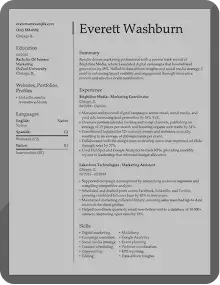
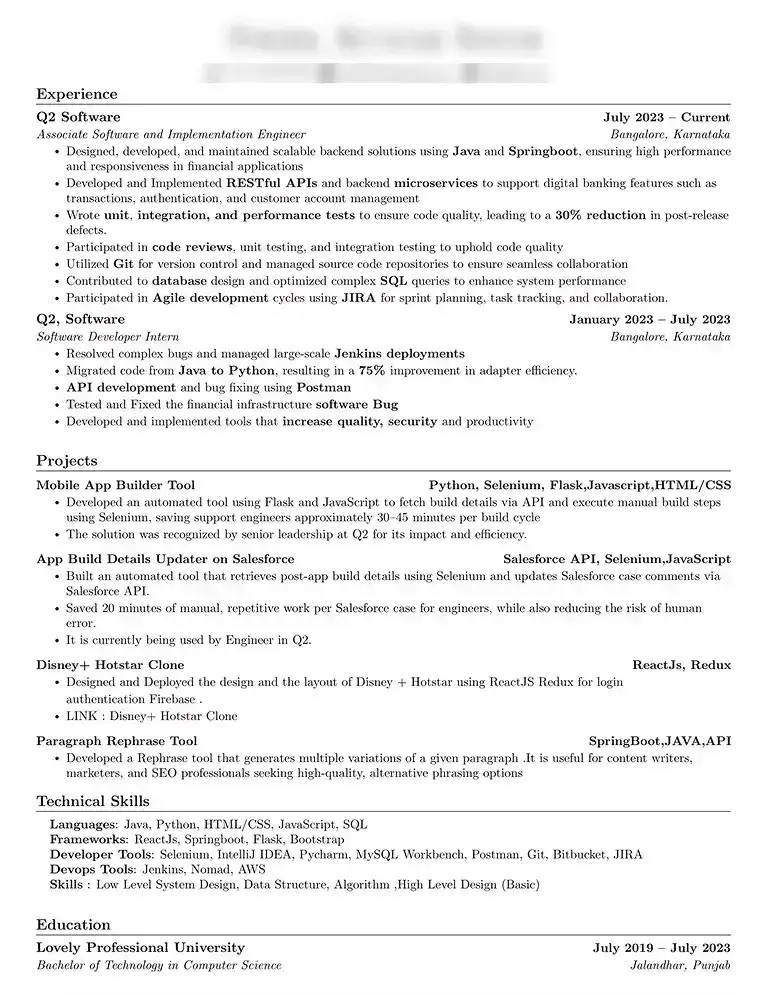
AI-Optimized Resume

Live Classes (Assignments + Projects)

Learn from industry experts, practice with guided assignments, and build projects that showcase real skills.

Zomato Food Ordering App Backend
AI AI-Powered Chat Interface
Netflix Netflix like streaming platform
Zomato AI Workflow Automation Assistant
AI Ecommerce Platform Backend
Netflix AI Coding Interview Assistance

Choose Batch

Live Batch

One stop solution - Tech jobs 365 days of Coding covers DSA, MERN Fullstack Web dev, System design and Gen AI
Complete Coding Ecosystem for Future Developers Full fledged, one stop program for students who want to excel as Top coders
Paid Internship for Aspiring Developers Paid internship to Performers
Priority Placement assistance & Doubt support
Complete Coding Ecosystem for Future Developers Developer CV and In-class Hackathons

Courses

Why choose Coding Blocks

Learn and grow as a developer with our project based courses.

Industry-focused curriculum

Superb mentors

Best in class mentors from top Tech schools and Industry favourite Techies are here to teach you.

Career-focused pedagogy

Industry-vetted curriculum

Best in class content, aligned to the Tech industry is delivered to you to ensure you are a darling of the Tech industry.

Best in class mentor

Project based learning

Hands on learning pedagogy with live projects to cover practical knowledge over theoretical one.

Placements

Superb placements

Result oriented courses with placement across all genres, students as well as Working professionals.


Our Students are placed at

45x - 200x

Return on Investment

After the completion of the course you will get a ROI of 45 - 200x

Enrol Now

Placement assistance

A dedicated Placement team along with Hiring Blocks, the placement portal of Coding Blocks work round the clock to ensure the best of opportunities in the Tech arena are available to you.

Developer CV and profile Preparation

Developer CV and Dev profile Preparation

Interview Preparation

Interview Preparation

Referrals for Placements and internships

150+ Partner companies for Placements and internships

Mock interviews

Mock interviews

Still in doubt? We are here to help you out!

See a class in action!

Classroom Classes

Online Classes

Live Classes

Frequently Asked Questions

Learn and grow as a developer with our project based courses.

  • Coding Blocks has physical centers in Delhi and Noida. Classroom program batches are conducted in these physical centers where you learn in a class with your peers and mentors, much like the way you do in College or University with a difference that you get to have personal attention by the mentor. Batch size is extremely limited and Course completion is complete for all learners. This is the most successful program in terms of Success or placements.

  • Live interactive program is a perfect replacement to the Classroom program. In a live interactive course, classes are conducted in a controlled environment, where the mentor teaches and students can interact with the mentor, much like a classroom. The only difference is that the mentor is not physically present in front of you. This model allows you to learn from the mentor of your choice, transcending boundaries and is economical as compared to the Classroom program.

  • Self paced Online programs are guided learning courses driven by our state of the art e-learning portal. These programs carry the same legacy as our Classroom programs. In order to reinforce learning and assist students, we have made our Self paced Online programs “HYBRID”, meaning we have added Live classes of topics where we feel students need interaction with mentors. In addition, students can clear their doubts through Video calls or Chats with our mentors and TAs. If learners stay close to our centers, they can even visit our Physical centers and meet the mentors in person to resolve their doubts.

  • If you are facing trouble with any model and want to make a switch, please get in touch with the Coding Blocks Support team for assistance. If need be, we will help you transition from one model to another.

  • The three models of learning are very different in nature and suits different learners basis individual preferences. We would recommend you to connect to our counsellors who can guide you well on which program and model best suits your needs.

  • Doubts are addressed by your Mentors and Teaching assistants who are always there to help you in your program. Doubts can be addressed in person, over live video calls, live chats and screen sharing sessions, pair coding sessions, Slack channels and Whatsapp groups, in addition to our portal where your doubts are also addressed. Don’t worry, we got your back.

  • Once you complete your course, you need to apply for the position of TA in Coding Blocks. Your application will be screened, you will be interviewed and tested on Coding problems and then you will be roped in. As Coding Blocks alumni, you will get priority.

  • A dedicated Placement team along with Hiring Blocks, the placement portal of Coding Blocks work round the clock to ensure the best of opportunities in the Tech arena are available to you.There are more than 150 companies who have partnered with Coding Blocks for hiring our students.

  • Most of the learners at Coding Blocks are College students only. All our courses and curriculum, across Classroom, Live interactive and Online self paced models are created to ensure you can learn while studying in your college.

  • Yes, you will get Certificate of completion once you complete the course. Completion of course depends on how much content has been completed, together with how many assignments have been completed. If you are a dedicated and hard working learner, you can also bag our Certificate of excellence.

  • Our Alumni is our family. We definitely would be more than thrilled to have you back, as this is really common for us. And yes, we would be happy to offer you exciting concessions on fee. We would recommend you to connect to our counsellors who can guide you well on this.